Home › Things to do
Things to do in Tugela Mouth
Home of the Tugela Lighthouse, on a quiet, wild stretch of the North Coast where one of KwaZulu-Natal’s biggest rivers meets the sea. Big views, empty beaches, history and some of the best fishing on the coast.
The Tugela Lighthouse
The Tugela Lighthouse has watched over the mouth of the Thukela since 1972, warning ships off this stretch of coast. It is unmanned and closed to the public, but it is a beautiful sight from the beach and the river mouth, especially at dusk when the light comes on. After dark its beam reaches almost as far as Ballito.
Read its story and see South Africa’s lighthouses on the map →
The river mouth
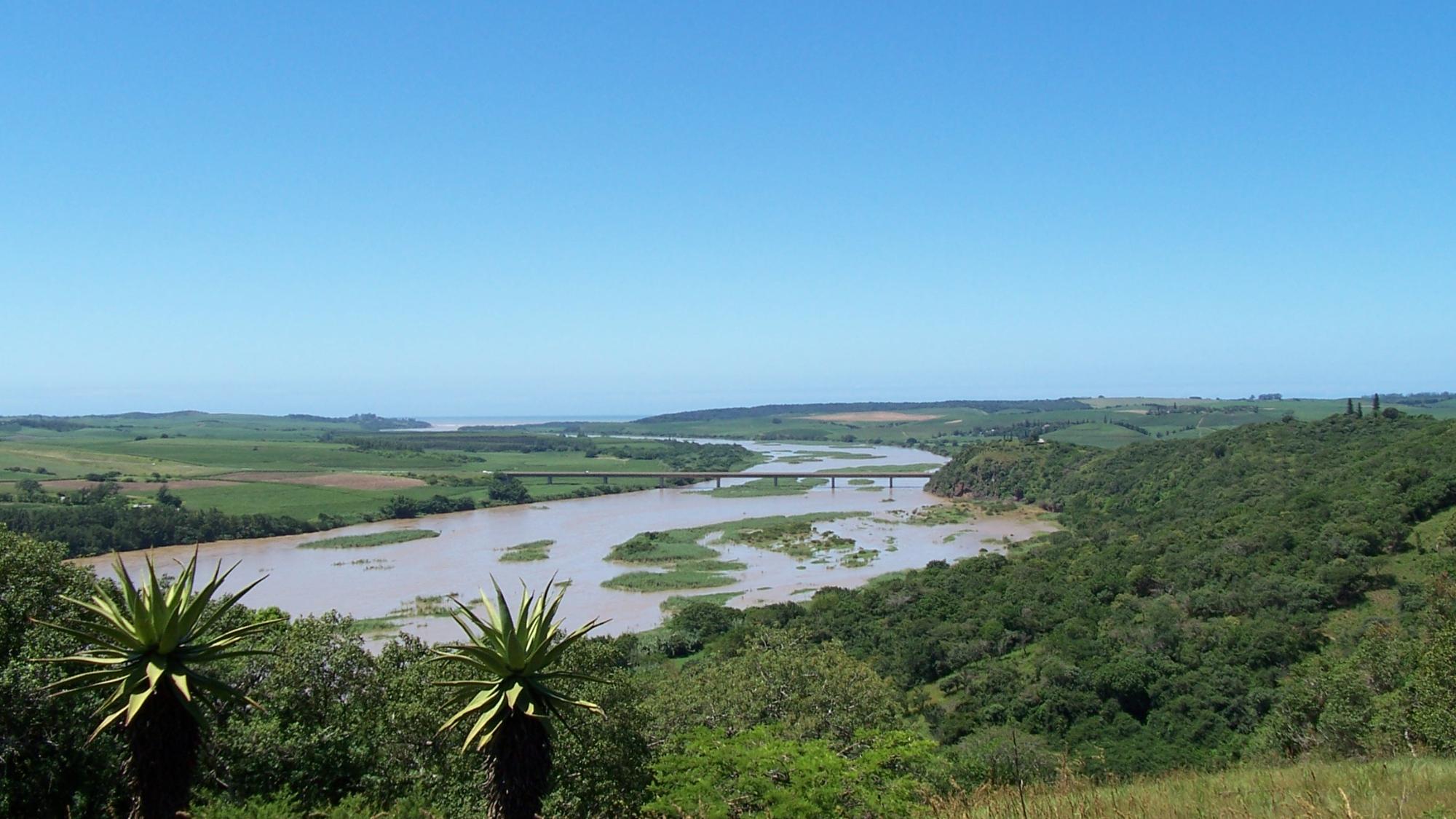
The Thukela (Tugela) is one of the biggest rivers in KwaZulu-Natal. At the mouth its brown water meets the Indian Ocean among shifting sandbanks. The hills above give some of the widest views on the North Coast, and the sandbanks are busy with terns, gulls and waders.
Shore fishing
Tugela Mouth is a favourite with anglers, especially when the river is pushing out. Check the tides, carry a valid recreational fishing permit and keep to bag and size limits. The surf can be strong, so fish with someone else.
Fort Pearson and the Ultimatum Tree
On the hills above the river are sites from the 1879 Anglo-Zulu War. Fort Pearson was built to guard the crossing, and under the nearby Ultimatum Tree the British delivered their ultimatum to King Cetshwayo’s representatives in December 1878. Both are inside Harold Johnson Nature Reserve, a short drive from the mouth.
Nature reserves
Two small Ezemvelo KZN Wildlife reserves sit either side of the river mouth, and both make an easy half-day trip. Further north, Umlalazi Nature Reserve at Mtunzini is known for its raffia palms and mangroves.
Harold Johnson Nature Reserve
Coastal forest on the south bank of the Thukela, about 6 km upriver from the mouth, with walking trails, a picnic site above the river, a small museum on Zulu dress and customs, and Fort Pearson and the Ultimatum Tree.
- Getting there: from the N2 take the Nkwazi exit and turn onto the R102 towards the Thukela River. Just before the bridge, turn right and follow the signs.
- Gate times: 06:00 to 18:00 in summer and 06:00 to 17:30 in winter, every day.
- Entry: South Africans pay R40 per adult and R20 per child. International visitors pay R80 per adult and R60 per child. Pay at the gate.
- Walking: two marked, self-guided trails. The Bushbuck Trail is about 5 km (around two hours) and the Remedies and Rituals trail, about traditional medicinal plants, is 1.8 km (about 20 minutes). A guide is available if you ask.
- Is it safe? There are no big cats, elephants or buffalo here. You may see zebra, impala, bushbuck, duiker, eland, monkeys and mongooses. Stick to the marked trails during gate hours, walk with someone and don’t leave valuables in the car.
- Bring: water (summer days get hot), insect repellent for ticks, and walking shoes. Pets are not allowed.
- Camping: camping with no electricity. Campers don’t pay the entry fee, just the camping fee: R100 per adult and R60 per child for South Africans, and R200 per adult and R100 per child for international visitors.
- Weddings and functions: the reserve hires out a fully equipped venue with a kitchen, stove and chairs for R660 per day. Call to book.
- Contact: 032 486 1574
Read the full Harold Johnson guide: trails, wildlife, history, camping and the wedding venue →
Amatikulu Nature Reserve
Dune forest, grassland and two estuaries on the coast north of the river, between the Thukela and Amatikulu river mouths. You can see giraffe, zebra, kudu, waterbuck and reedbuck feeding on dunes that look out over the sea.
- Getting there: search “Amatikulu Nature Reserve” in Google Maps. It is a short drive from Tugela Mouth, near The Hatchery.
- Gate times: guides give 06:00 to 18:00 or 07:00 to 17:00, so arrive after 07:00 and be out before 17:00 to be safe.
- Entry: Ezemvelo’s latest rate list shows no fee for day visitors. Older guides mention a small fee, so bring a little cash.
- What to do: picnic above the Nyoni estuary, walk the trails, drive the game route (ordinary cars manage the first part, the rest is 4x4), watch birds at the pan and fish from the beach with a valid permit.
- Is it safe? There are crocodiles in the estuary and the pan, so don’t swim in the rivers or lagoon, and the beach has no lifeguards. Give giraffe and zebra plenty of space, walk with someone and check for ticks afterwards.
- Staying over: the reserve doesn’t have its own accommodation at the moment. The Hatchery next door has rooms, caravan units and camping.
Harold Johnson details confirmed with the reserve in November 2026. Amatikulu details are from Ezemvelo KZN Wildlife’s published information. Fees and gate times can change, so check before you go.
Beaches up and down the coast
Zinkwazi and Blythedale to the south are small beach villages with long sandy beaches. Mtunzini to the north is a leafy village with a lagoon and forest walks. Mandeni is the nearest town for shopping, and KwaDukuza (Stanger) and Ballito are within an hour.
Wildlife
The river, estuary, coastal bush and sea draw a huge range of wildlife, from fish eagles and kingfishers to vervet monkeys, duiker and, offshore, humpback whales from about June to November. See the Tugela Mouth wildlife guide.
Listed on Explore Tugela Mouth
- The Hatchery – self-catering, camping and weddings at Amatikulu
- Tugela Mouth Guesthouse – ocean-view self-catering at 24 Tugela Mouth
- Z2 Readymix – ready-mix concrete supplier in Tugela
- Lu’s Hello Tallow – handmade tallow products from Tugela Mouth
Run a business here? List it for free as one of our founding businesses.
Questions people ask
Can you swim at Tugela Mouth?
The sea at the river mouth has strong currents and there are no lifeguards, so swimming there is not recommended. Swim at lifeguarded beaches such as Zinkwazi or Blythedale instead.
Is Tugela Mouth good for fishing?
Yes. It is one of the best-known shore fishing spots on the KZN North Coast. You need a valid recreational fishing permit.
Where is Tugela Mouth?
On the KwaZulu-Natal North Coast, about an hour north of Durban near Mandeni, where the Thukela River meets the Indian Ocean.
Can you walk in Harold Johnson Nature Reserve on your own?
Yes. The reserve has two marked trails you can walk without a guide between 06:00 and 18:00 (17:30 in winter). Entry is R40 per adult and R20 per child for South Africans, and a guide is available if you ask. There are no dangerous big animals, but walk with someone and bring water and tick repellent.
Is there an entrance fee at Amatikulu Nature Reserve?
Ezemvelo KZN Wildlife’s latest rate list shows no fee for day visitors, though older guides mention a small one. Bring a little cash just in case, and note that there are crocodiles in the estuary, so don’t swim in the rivers.